How 6 famous caves were discovered

12 July 2024

Ever wondered who discovered the world's most famous caves? Join us as we dive deep into their stories.


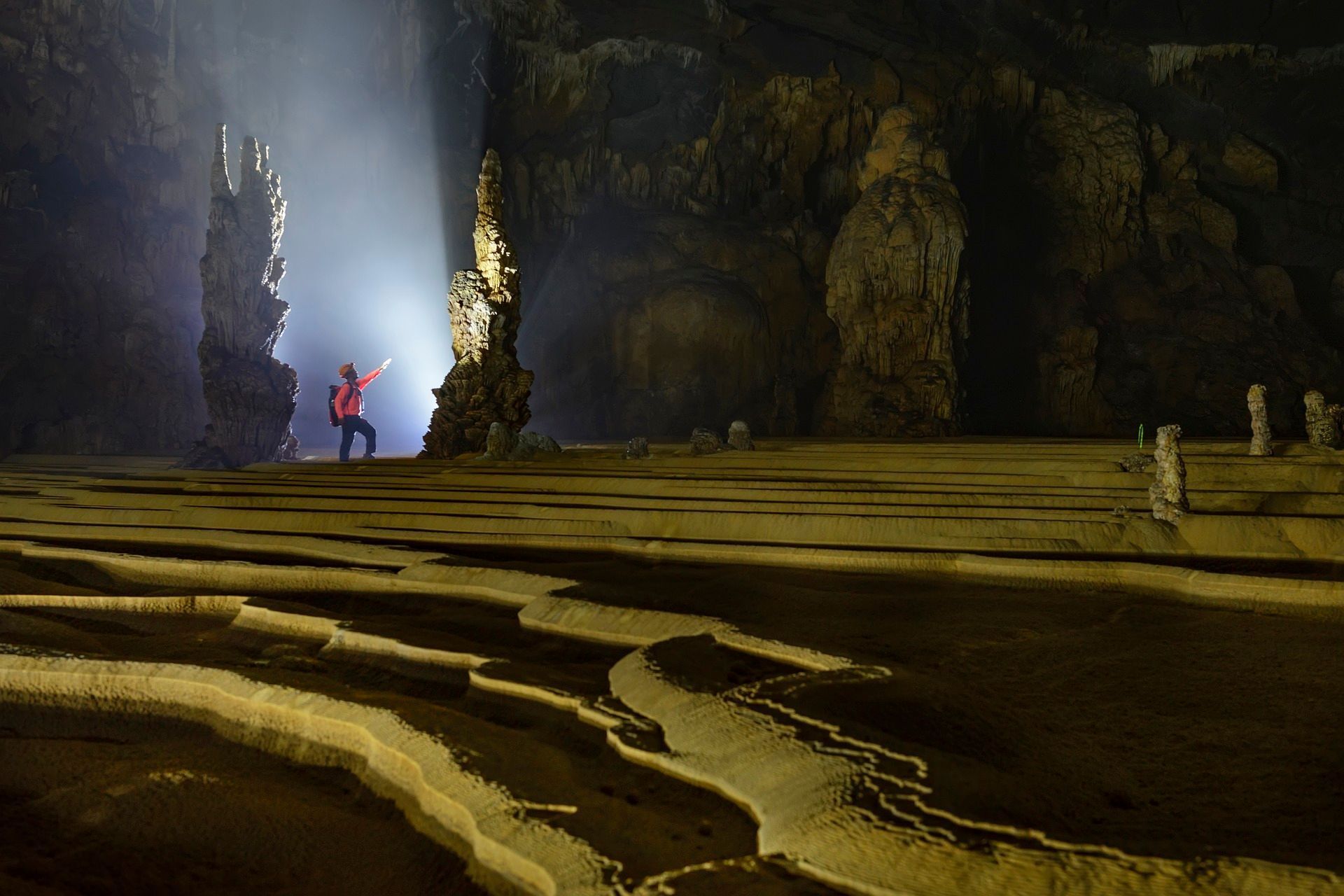
Person standing in a large cave, holding a light toward an opening with bright light. Rocky formations and pools.

The world is riddled with fabulous caves. But how were they discovered? Here are six amazing stories – from Austria to New Mexico, from the island of Capri to right here in the Yorkshire Dales.


1. Sơn Đoòng cave, Vietnam

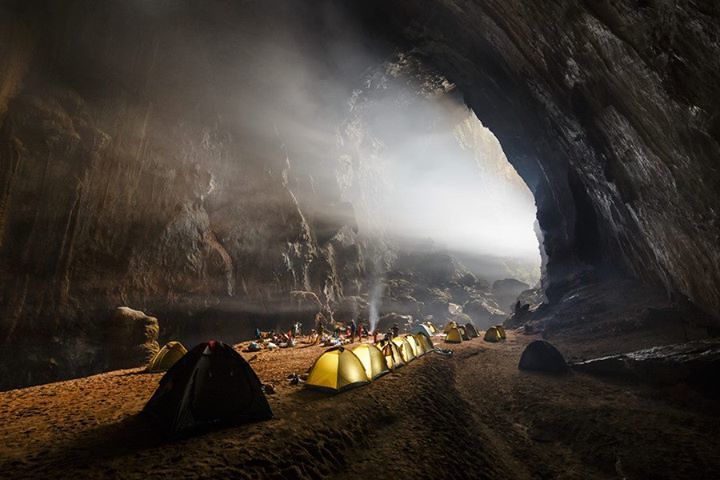
Tents glowing inside a vast cave, bathed in sunlight.

Vietnam's Sơn Đoòng cave is a record-breaker: the largest natural cave in the world. But it may never have been discovered were it not for an illegal logger named Hồ Khanh.


In 1991, Khanh went into the jungle to look for a valuable timber called agarwood. There, he stumbled upon an enormous cave entrance with a wide river flowing through it. Khanh wasn't equipped for an expedition, so he went home, excited by his discovery.


Fast forward to 2006, when a group of British cave researchers were searching for caves in the Phong Nha-Kẻ Bàng region. With Khanh's help, they eventually found the cave on April 14, 2009.


Today, the caves and their subterranean river are open to tourists – and Khanh now works as a cave guide and conservationist.


2. Eisriesenwelt, Austria

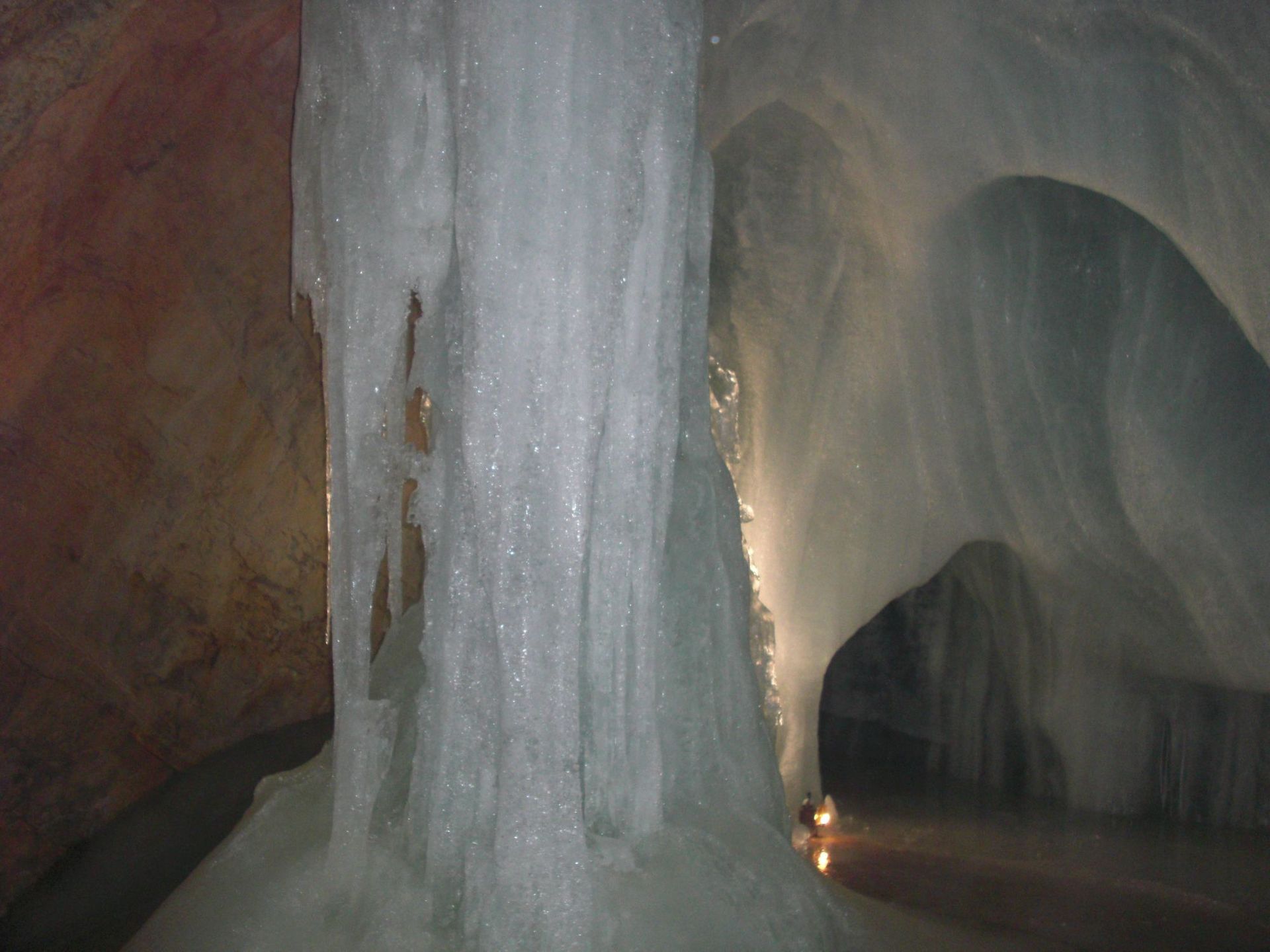
Inside an ice cave, a large, cylindrical ice formation stands center, with light reflecting off the ice walls.

In Werfen, Austria, inside the Hochkogel mountain, is a natural limestone and ice cave known as the Eisriesenwelt – literally, "World of the Ice Giants". This is the biggest ice cave in the world.


The caves have existed for millions of years. But it wasn't until 1879 that they were discovered by Anton Posselt, a natural scientist from nearby Salzburg.


Although the discovery can be attributed to Posselt, the cave was known to locals. However, they believed it to be an entrance to Hell and weren't so foolish as to take a closer look.


The ice caves can be visited today. With temperatures typically below freezing, visitors need to wrap up warm!


3. Lascaux cave, France

In Montignac, France, there's a remarkable network of caves known as Lascaux – remarkable in part because of the huge array of cave paintings that could be around 17,000 years old.


The cave complex was opened to the public in 1948. It was all thanks to a group of teenagers – and a dog called Robot.


In 1940, 18-year-old school student Marcel Ravidat was out with Robot, exploring the woods of Montignac. He noticed Robot sniffing a small hole left by an uprooted tree.


Ravidat and his friends had heard tell of a tunnel that, legend had it, ran under the Vezere River to the Chateau de Montignac. Could Robot have stumbled on it?


Ravidat returned to the scene with a group of friends. They tossed stones down the hole to get a sense of its depth. It looked promising – so they decided to descend what turned out to be a 15-metre shaft into a large chamber.


The light from their oil lamp showed, in the words of Ravidat's friend Marsal, a "cavalcade of animals larger than life painted on the walls and ceiling of the cave". They explored the cave until they ran out of oil.


As so often in the history of caves, it wasn't long before the boys saw franc signs. They discussed how they could make some money by bringing people to the caves for a few centimes each.


Instead, however, they told a local schoolteacher of their discovery. He helped authenticate the cave drawings. The cave was opened to the public but the carbon dioxide and breath of the visitors damaged the drawings. Sadly, the cave had to be shut in 1963.


4. The Carlsbad Caverns, New Mexico

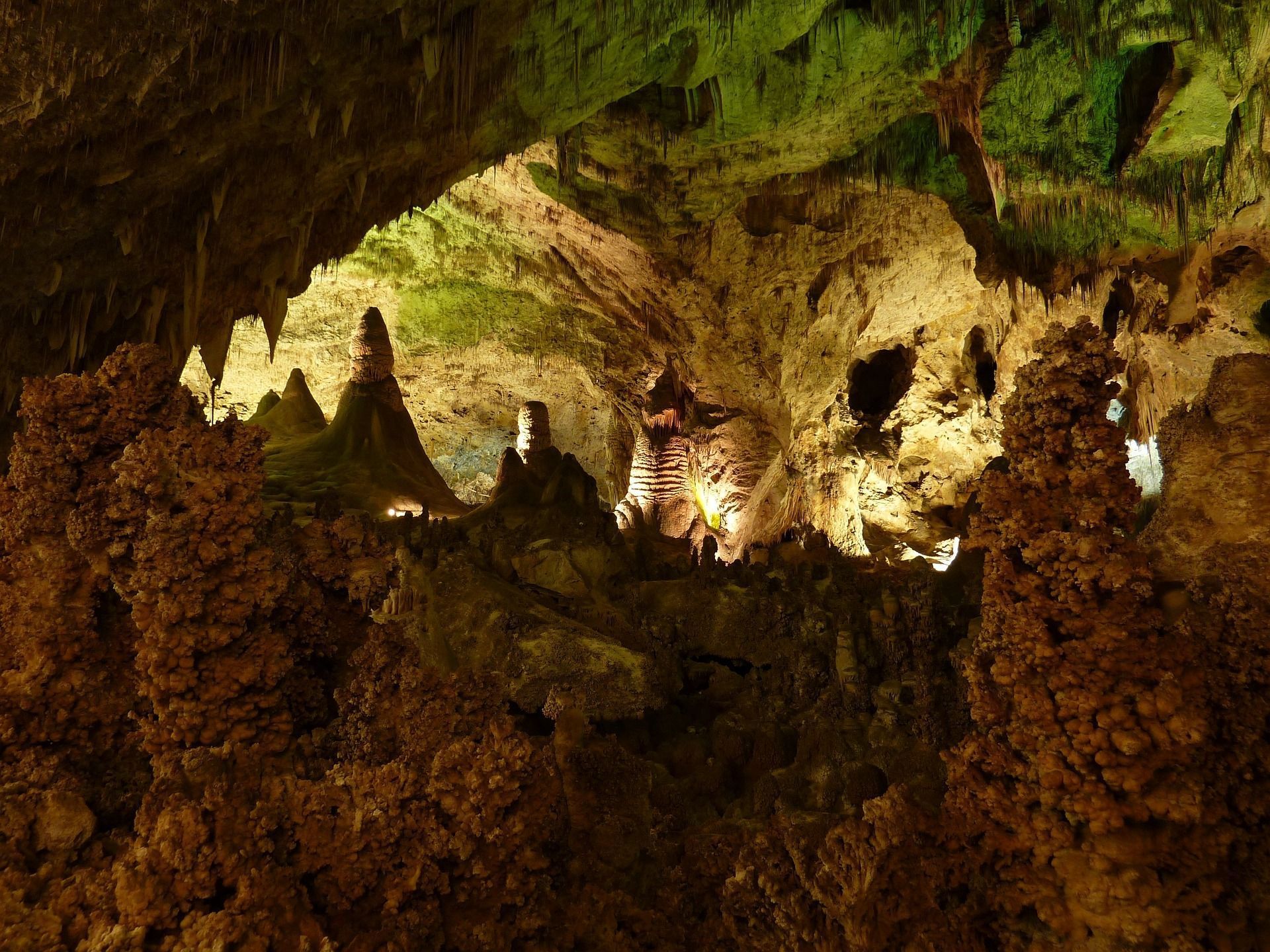
Cave interior with illuminated stalagmites and stalactites; earthy tones, green highlights.

James Larkin White (1882-1946) was a cowboy and park ranger for the National Park Service. From an early age, he preferred "bustin' broncos to books and blackboards" and told his father at the age of 10, "I want to be a cowboy".


Aged 15 or 16, Jim was riding his horse through the New Mexico desert when he was surprised to see a cloud of bats rising from a hole in the ground.


Jim took a closer look and saw what he described as "the biggest and blackest hole I had ever seen". He soon started exploring, finding "a wilderness of mighty stalagmites".


This wilderness later turned out to be the Carlsbad Caverns – and it's all thanks to Jim's pluck and adventurous spirit that visitors today can pay them a visit.


5. The Blue Grotto, Capri

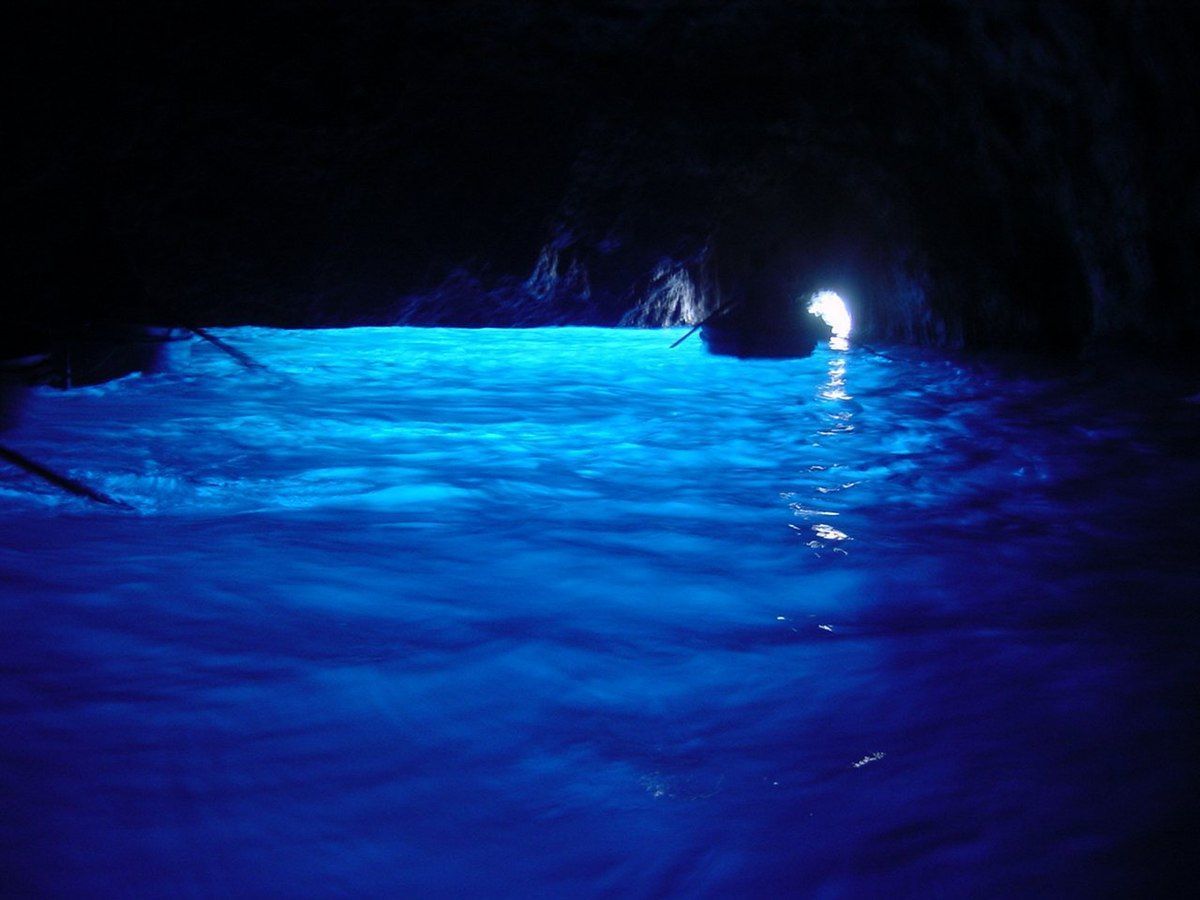
Inside a dark cave, bright blue water reflects light; a boat and natural opening are visible.

The Blue Grotto – or Grotta Azzurra – is a sea cave on the coast of Capri. It gets its name from the reflected sunlight that illuminates the cavern with a brilliant blue glow.


We don't know who first discovered the grotto, but we do know that the Roman Emperor Tiberius would swim there. It was also used as a marine temple to the sea gods Neptune and Triton.


In the 18th century, locals and sailors gave the grotto a wide berth, believing it to be the domain of devils, witches and monsters.


Its international acclaim, however, is widely credited to the German poet August Kopisch, who "rediscovered" it while on a swimming trip with the painter Ernest Fries in 1826.
Kopisch wrote about his rediscovery in his 1838 book  Discovery of the Blue Grotto on the Isle of Capri. It was this book that brought Romantic artists and poets flooding into the grotto and made it the tourist site we see today.


6. Stump Cross Caverns, England

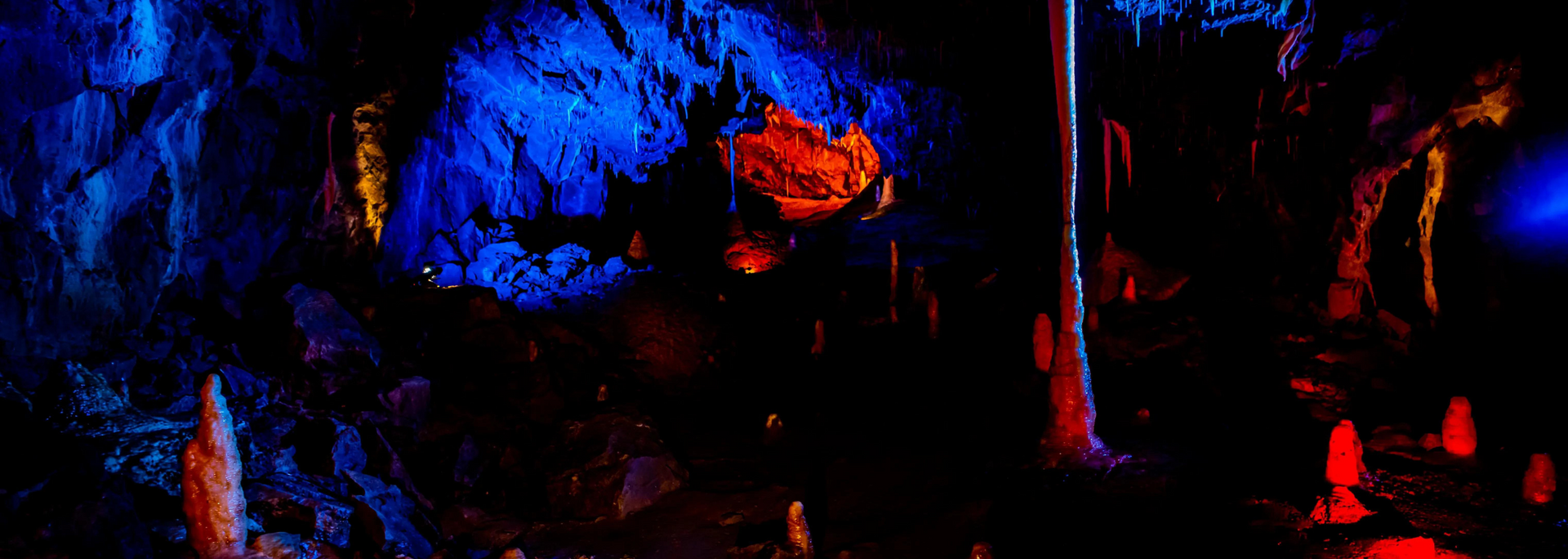
Cave interior with blue and red lighting illuminating rock formations.

In 1860, two lead miners from Greenhow were roaming the Yorkshire Dales, searching for lead. Back then, this part of the Yorkshire Dales was a thriving lead-mining community.


The miners saw what they thought was a seam of lead and started digging. But soon enough, their spades broke through the surface and revealed Stump Cross Caverns.


We've written about this discovery in detail
elsewhere . We can only imagine how exciting it must have been for the Newbould brothers. It's all thanks to this happy accident that you can visit the caves today.


William and Mark Newbould, we salute you!


Looking for a
day out in Yorkshire that you won't forget? Book your tickets for Stump Cross Caverns today.

Share this article

Recent Posts

Discover the best glamping experiences in the Yorkshire Dales, plus local attractions,
by Simon Edward 18 May 2026
Discover the best glamping experiences in the Yorkshire Dales, plus local attractions, packing advice and tips for family-friendly adventures.
What you've heard is true: birds really are dinosaurs.
by Oliver Pyper 15 May 2026
What you've heard is true: birds really are dinosaurs. Explore this fascinating evolutionary story with us.
The Ice Age saw the last of many giant beasts – so how did early humans survive?
by Oliver Pyper 11 May 2026
The Ice Age saw the last of many giant beasts – so how did early humans survive? Discover how clothing, shelter and diet played a part.
Looking for something to do in Yorkshire on 25 May? Explore 6 spring bank holiday events
by Simon Edward 8 May 2026
Looking for something to do in Yorkshire on 25 May? Explore 6 spring bank holiday events and experiences.
Person in a hard hat inspects stalactites and stalagmites in a cave, lit with purple and amber lights.
28 February 2026
Here at Stump Cross Caverns, we're proud that our caves have contributed to the sum of scientific knowledge. Here are 4 fascinating examples.
Stone ruins of a village overtaken by greenery, nestled in a valley with a cloudy sky.
27 February 2026
There are around 3,000 deserted villages in the UK. Explore 5 incredible examples in Yorkshire and nearby.
Man with briefcase overlooking valley at night, glowing watch, lit village below, full moon.
23 February 2026
What skills and tools would you need to survive as a Stone Age person? Take a trip in our time machine and find out…
Person in yellow caving suit holding rock in cave, illuminated by headlamp; smiling.
20 February 2026
Diggers working to excavate C Chamber at Stump Cross Caverns have discovered the fossilised jawbone of a wolverine. Let's take a closer look.
A flooded cave filled with rusted cars and trash; light shines through the opening.
16 February 2026
Caves contain all sorts of secrets – but not all of them are pleasant. Explore this car graveyard in North Wales, and the lessons we can learn from it.
Show More